Tub to Shower Conversion · Mesa
Tub to Shower Conversion in Mesa, AZ
A tub to shower conversion in Mesa usually comes down to the drain: whether it can stay at the tub end or has to be cut into the slab. This page covers that call, the permit review and what to measure.
Last updated
01Showers
Does the drain have to move?
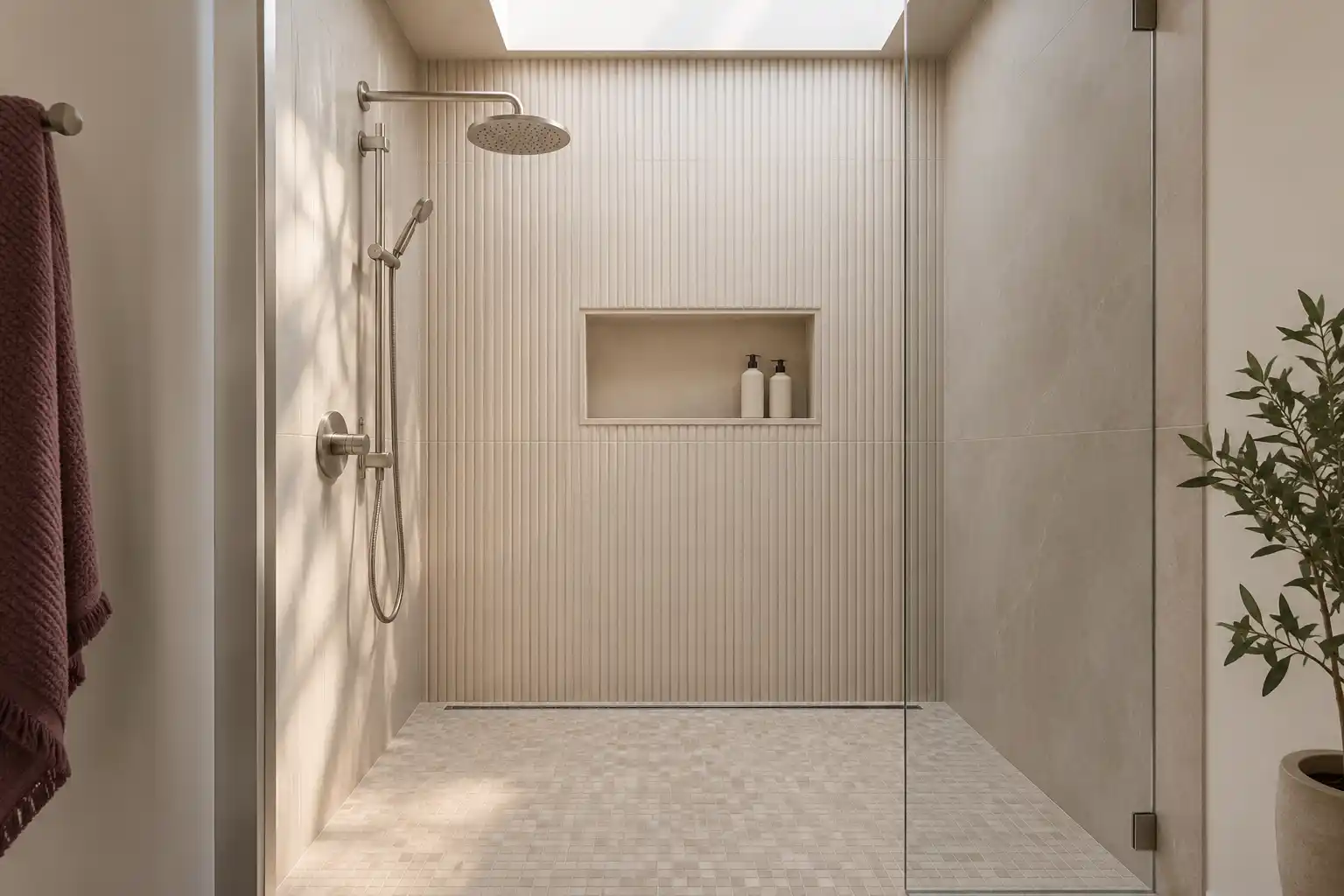
Many Mesa bathrooms sit on a concrete slab, so the drain is the first thing to look at. If the tub drain can stay near the same spot, the job is mostly finish work: pull the tub, open the wall for the valve, build the pan, tile, then hang glass. If the drain has to move toward the middle of the alcove, the floor gets saw cut, the concrete broken out, the trap and line rerouted, then patched and inspected. That one decision separates a short job from a long one. Central Mesa has older homes near the original townsite, where drain lines may be cast iron. East Mesa subdivisions are newer. A camera check before demolition tells you which one you have.
02Costs
What does it cost in Mesa?
One national cost guide puts most conversions between $1,200 and $15,000, with a typical job near $3,000. The bottom of that band is a prefabricated pan and surround with the drain left in place. That route is fast, and it looks it. The top is a custom tiled shower with a moved drain, a bench, a niche and frameless glass. A national cost guide puts a walk-in shower at $6,000 to $12,000, and a tiled conversion with the pan built on site sits higher in the band than a prefabricated one. Published market ranges, not a quote: the final price is set after an on-site assessment.
03Permits
Does Mesa require a permit?
Mesa reviews residential remodeling through the Building Permit and Plan Review office, and fees are based on the estimated construction cost (City of Mesa, residential construction (opens in a new tab)). A conversion that changes plumbing or adds a shower valve is more than a cosmetic swap, so plan on a permit, a plan review and inspections. 2 inspection points matter most, and both are scheduled through the city. The rough-in happens while the drain, pan liner and valve are still open. The final happens after tile and glass. Missing the rough-in is the expensive mistake, because the pan has to come out to correct it. Ask who pulls the permit and who meets the inspector, and put both names in the written scope.
04Bathtubs
What happens to the old tub?
The tub comes out whole or in cut sections, and weight is the issue. Plan the exit path before the first cut. A cast iron tub can run several hundred pounds and will not turn through a narrow hall on its side without planning. The floor and the door frame get protected, the tub is cut if needed, and the pieces are carried out. Behind the tub, the wet wall opens to reach the valve. That is the moment to replace old shutoffs and any galvanized pipe in that wall, because the wall gets closed with backer board, waterproofing and tile. The valve body moves up to shower height. The pan then gets its slope, its liner and a flood test before tile.
05Good to know
How does Mesa water treat it?
Mesa publishes about 12 grains per gallon of hardness in the City Zone and about 16 grains per gallon in the Eastern and Southern zones (City of Mesa, 2025 water quality report (opens in a new tab)). That is hard water, and it shows up first on glass and grout. White spotting on a shower door is often mineral film, and it can etch in if it sits for months. Once it hardens, household cleaners may not take it off without polishing. A squeegee after each use does more than any additive. Matte tile and a medium grout color hide the film that glossy white and pale grout advertise. If the house has a softener, tie it into the cold line before the rough-in. Test the water before you choose a glass type.
Bath Studio
Build a bathroom. Change it in one tap.
A design preview, not a price. Pick a wall color, tile, floor, bath or shower, vanity and light, start from a look or shuffle, then send your picks with your project.
Start from a look
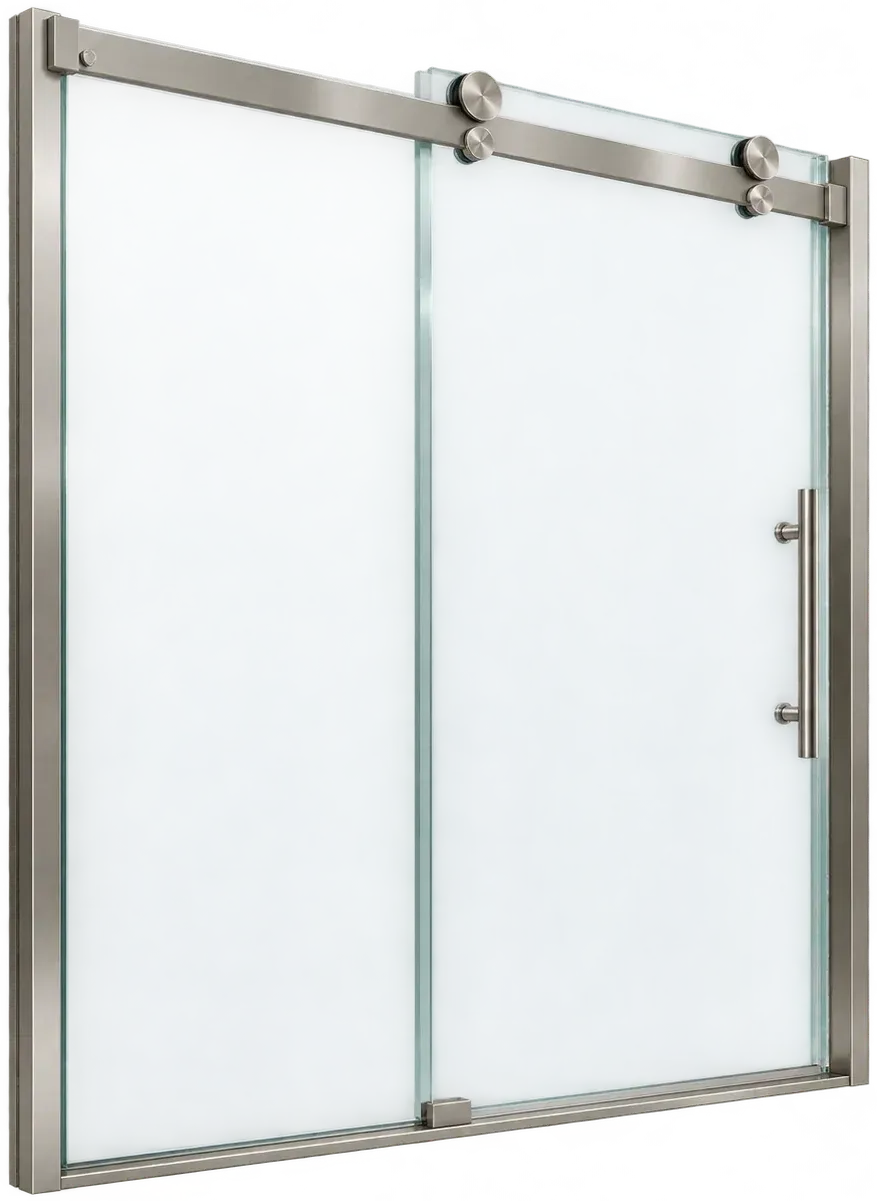
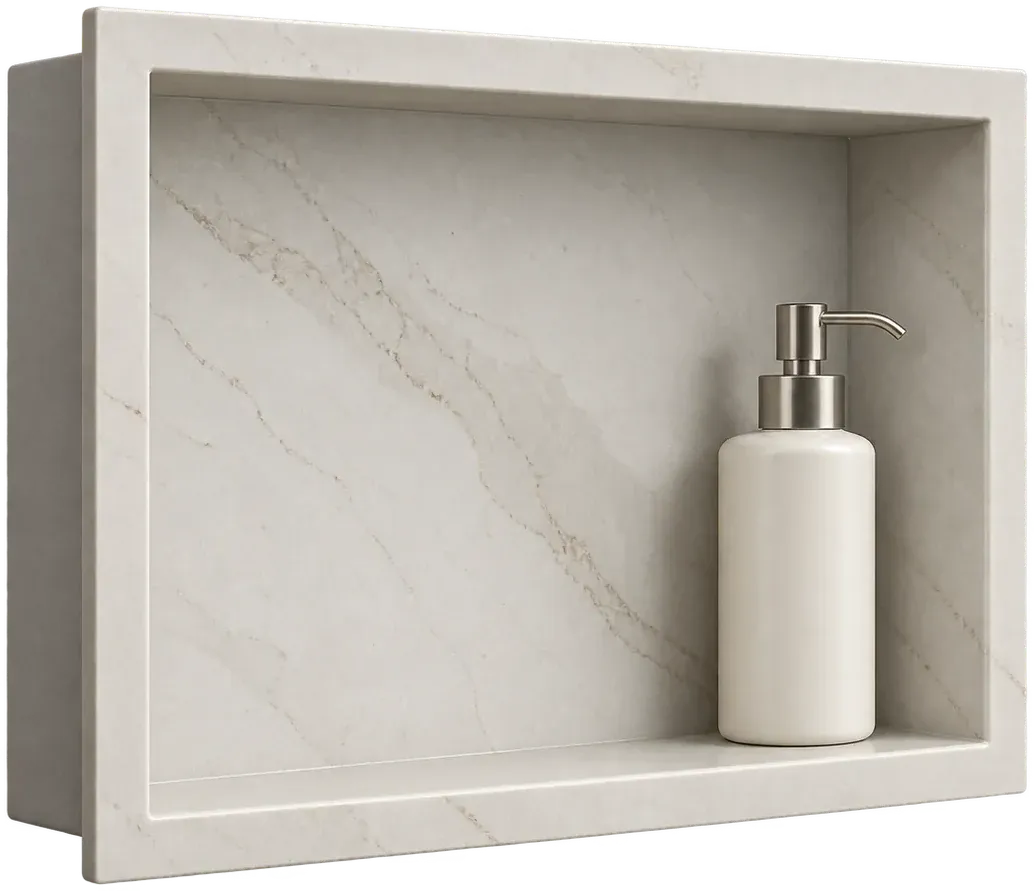
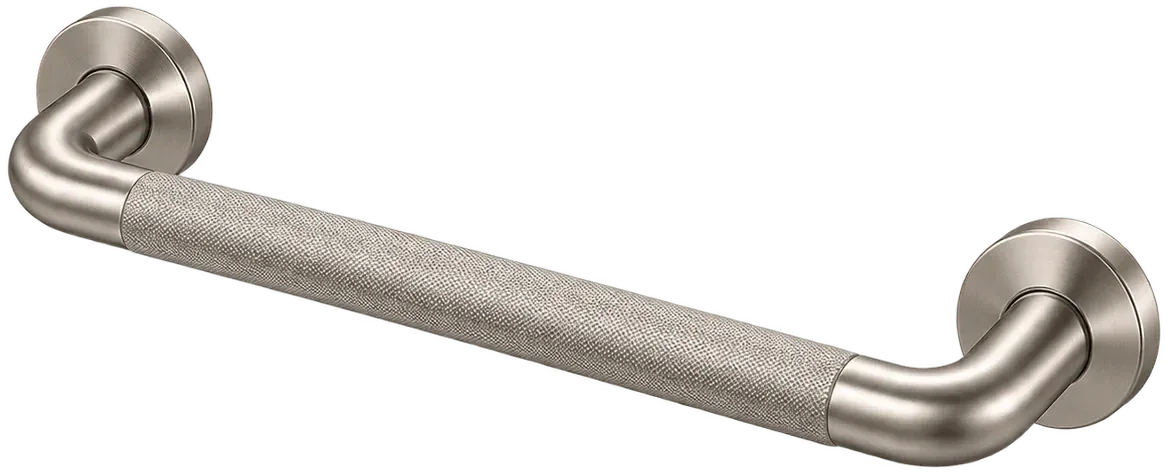
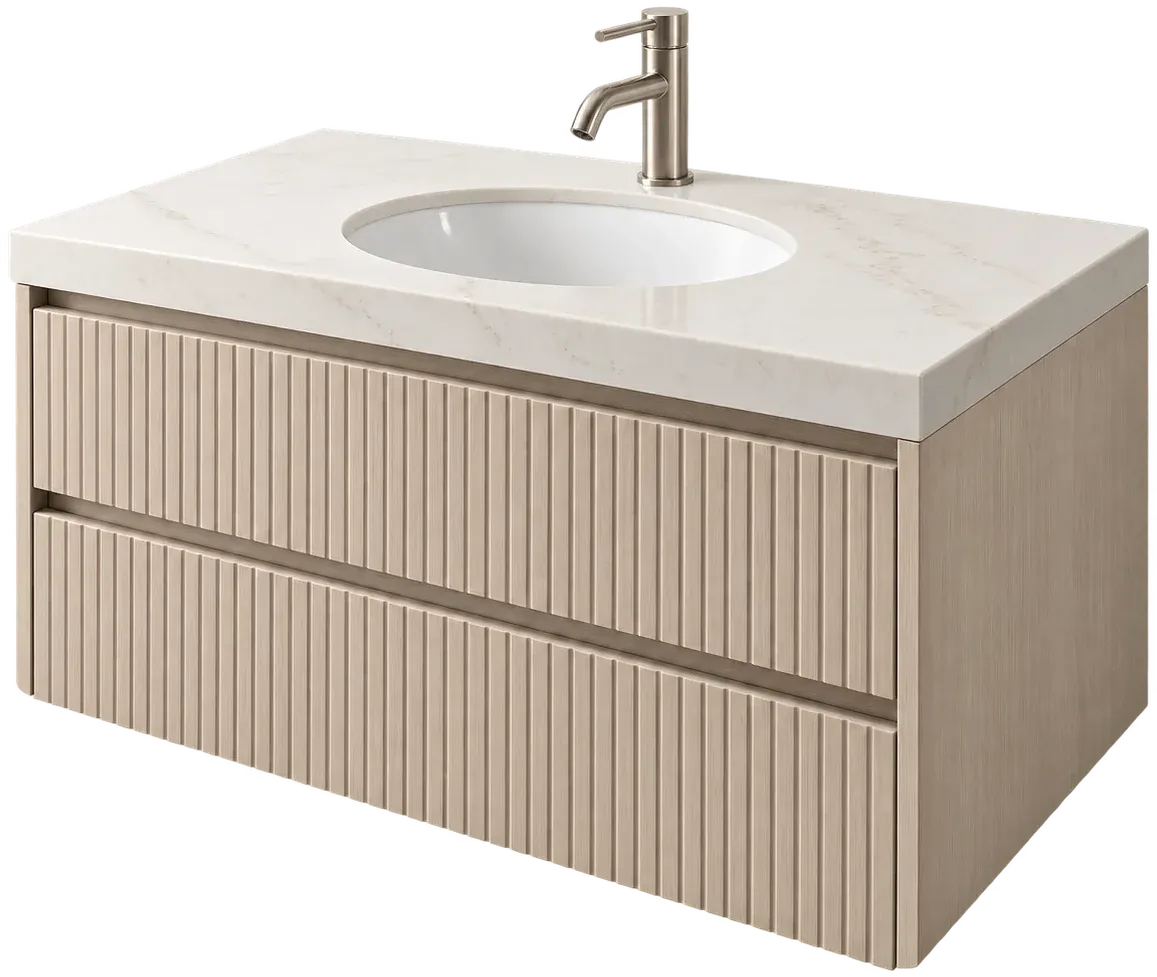
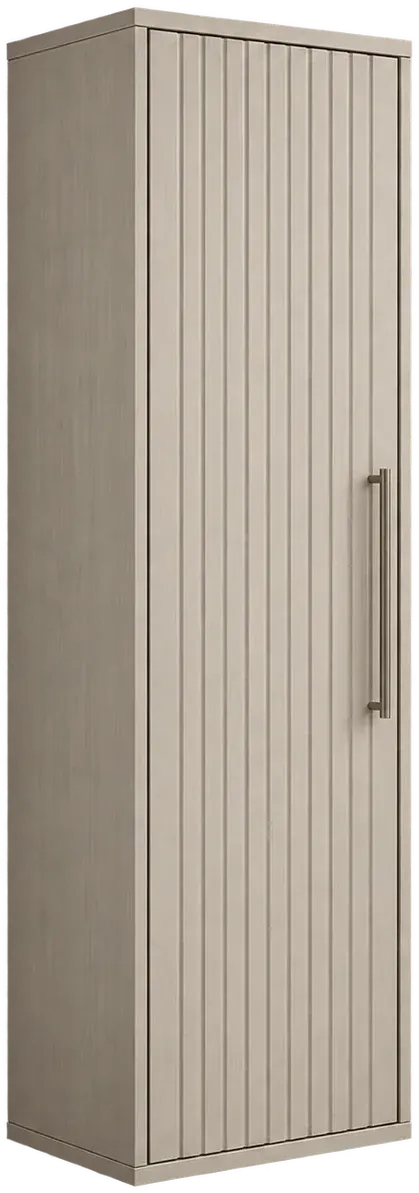
Wall color: Ivory mineral · Shower wall tile: Large slab · Floor: Honed stone · Bath or shower: Glass shower · Vanity: Vanity and tower · Light: Morning sun
01Wall colorIvory mineral
02Shower wall tileLarge slab
03FloorHoned stone
04Bath or showerGlass shower
05VanityVanity and tower
06LightMorning sun
064 questions
Questions people ask
Still have a question? Call (747) 243-2089 and describe the bathroom.
01Does a conversion need a permit in Mesa?
A permit is needed when plumbing changes or a shower valve is added. Mesa bases the fee on estimated construction cost, so the permit tracks the scope. A cosmetic swap may not need one, but ask the Building Permit and Plan Review office first.
02Can the tub drain stay in place?
Often, yes. A shower drain can sit at one end of the alcove if the pan slopes toward it. Keeping the drain avoids saw cutting the slab, the largest single line in a budget. The camera check and the pan layout decide it.
03What tile should go in a Mesa shower?
Porcelain. It takes a tight joint, needs no sealing, and shrugs off hard water better than most stone. Smaller tiles cost more to set: more cuts, more grout. Large format panels cut the grout lines where film collects.
04What size shower fits a 60 inch alcove?
A 60 inch alcove takes a 60 inch pan, and usable floor space shrinks once tile and the curb are in. A fixed panel with a hinged door leaves the most room. A bench eats length, so keep it away from the showerhead.